Running a side project while maintaining a full-time job or studies is an extreme sport. The biggest enemy isn’t a lack of talent, but a lack of organization. When you only have 10 hours a week to dedicate to your business, you can’t afford to waste 3 of them searching for where you wrote down that idea or figuring out your financial status.
Here, I have curated the best Notion templates for side projects, organized specifically by the type of business you are building. Whether you sell products, create content, or manage an investment portfolio, there is a system designed for you.
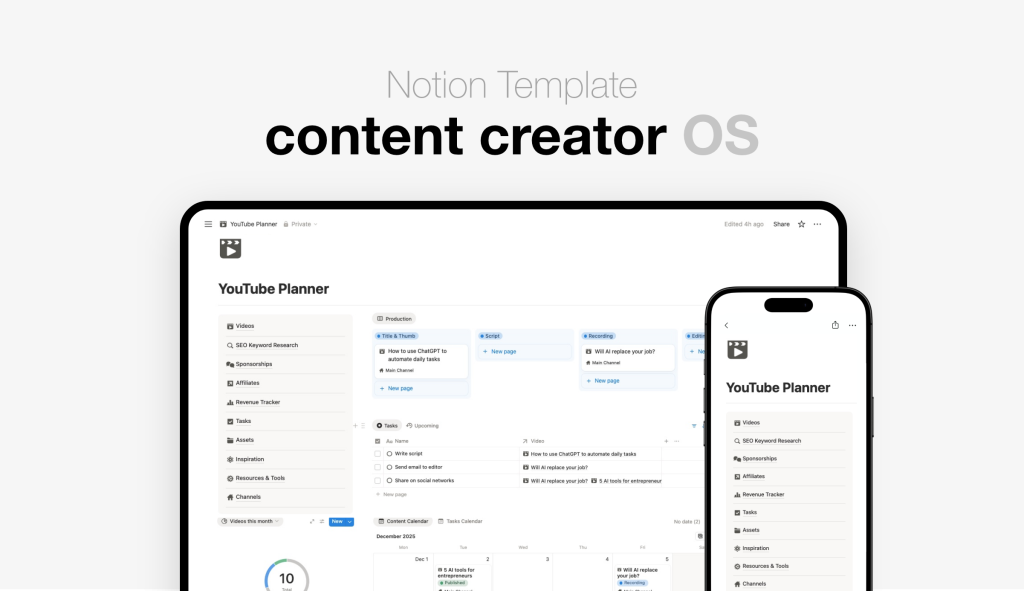
Notion Template For Content Creators
The biggest headache for a creator (youtuber, blogger, podcaster, or influencer) is consistency. Without an editorial calendar and an asset management system, burnout arrives quickly.
This side project template is designed to turn your creativity into an efficient assembly line.
What does a creator system should include?
- Content pipeline: ideas, concepts, validation status, and priorities.
- Content production tracker: progress from draft to published to repurposed.
- Content calendar: publishing schedule across platforms.
- Revenue analytics: income from ads, subscriptions, products, or memberships.
- Sponsors & affiliates: partners, links, payouts, and performance notes.
- Asset library: reusable visuals, copy blocks, templates, and references.
- Keywords tracker: SEO keywords, search intent, and content mapping.
This setup is ideal for creators focused on long-term audience growth and monetization, rather than sporadic publishing.
Notion Template for E-commerce & Digital Product Entrepreneur
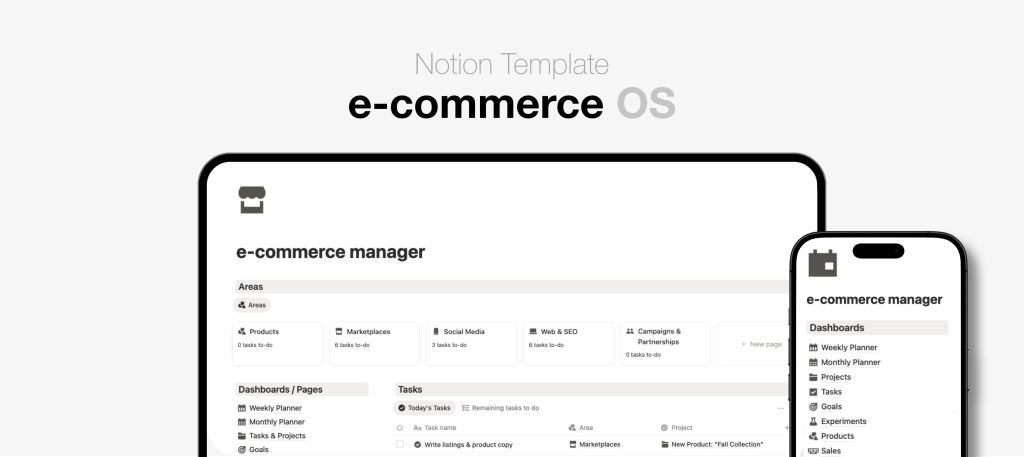
Product-based side projects introduce operational complexity early: managing products, launches, marketing, and sales simultaneously.
A notion template for ecommerce does not replace Shopify or payment platforms, but it does give you a clear, centralized view of the business.
Key points for this profile:
- Projects: launches, experiments, optimizations.
- Tasks: execution linked to each project.
- Product management: product catalog, pricing, updates, status.
- Marketing campaigns: launches, ads, email flows, promotions.
- Social media: content planning and campaign distribution.
- Sales tracker: revenue tracking, trends, and basic performance analysis.
Notion Template for Freelancer / Consultant
Freelance side projects often grow organically but become difficult to manage once multiple clients and acquisition channels are involved.
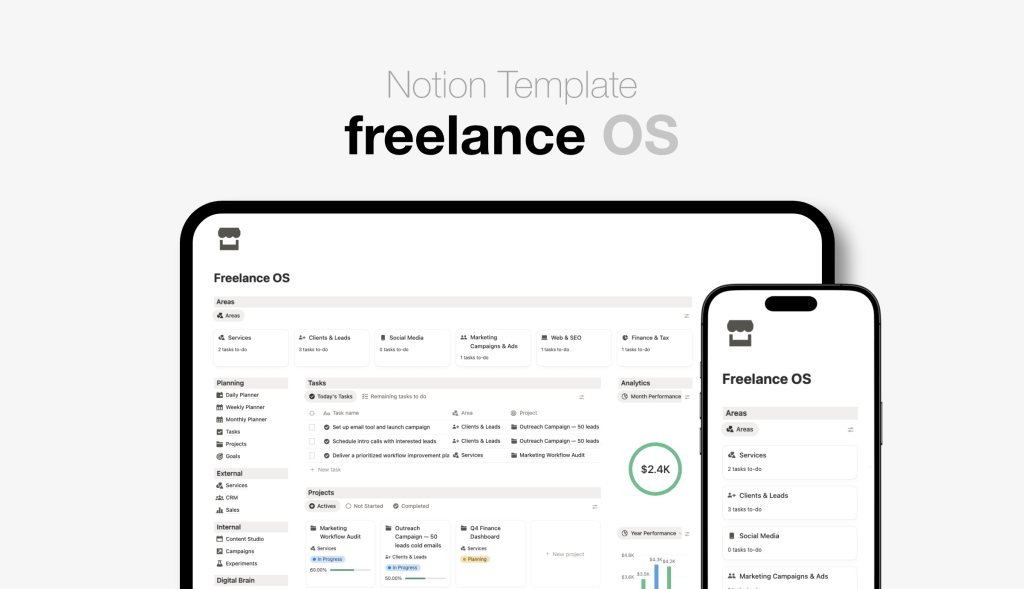
A notion template for freelance should function as a lightweight business OS.
Core sections:
- Projects: client work, internal initiatives, retainers.
- Tasks: delivery tracking per project.
- Client CRM: leads, active clients, past clients, relationships.
- Marketing & outreach tracking: cold outreach, inbound leads, follow-ups.
- Content creation: authority-building content and case studies.
- Finances: income tracking, invoices, monthly summaries.
This structure helps freelancers move from ad-hoc work to repeatable, predictable operations.
Notion Template for Real Estate Agents
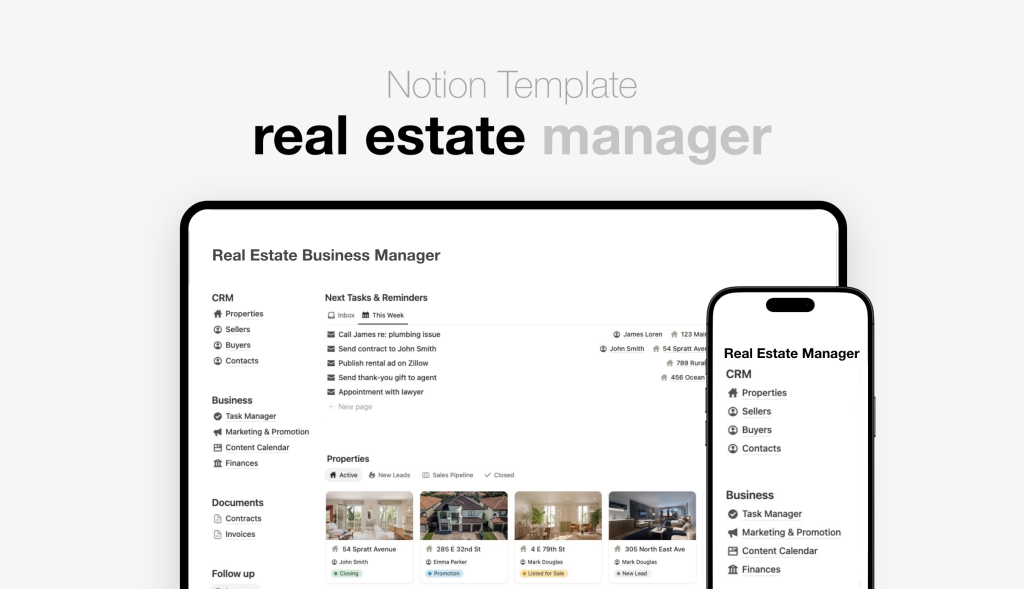
Notion workspace built to help real estate agents run their activity with clarity and control. It centralizes daily operations by connecting properties, clients, leads, and follow-ups into a single, structured system.
From managing appointments and tasks to tracking deals, documents, finances, and marketing actions, everything is organized around your workflow—not scattered across tools. The result is a clearer pipeline, better follow-up discipline, and more efficient use of your time as your real estate business grows.
A notion template for real estate agent blends CRM, pipeline management, and execution.
Key sections:
- Client and lead CRM.
- Property listings.
- Deal pipeline stages.
- Daily and weekly task management.
- Performance indicators.
This setup helps professionalize the activity even before it becomes full-time.
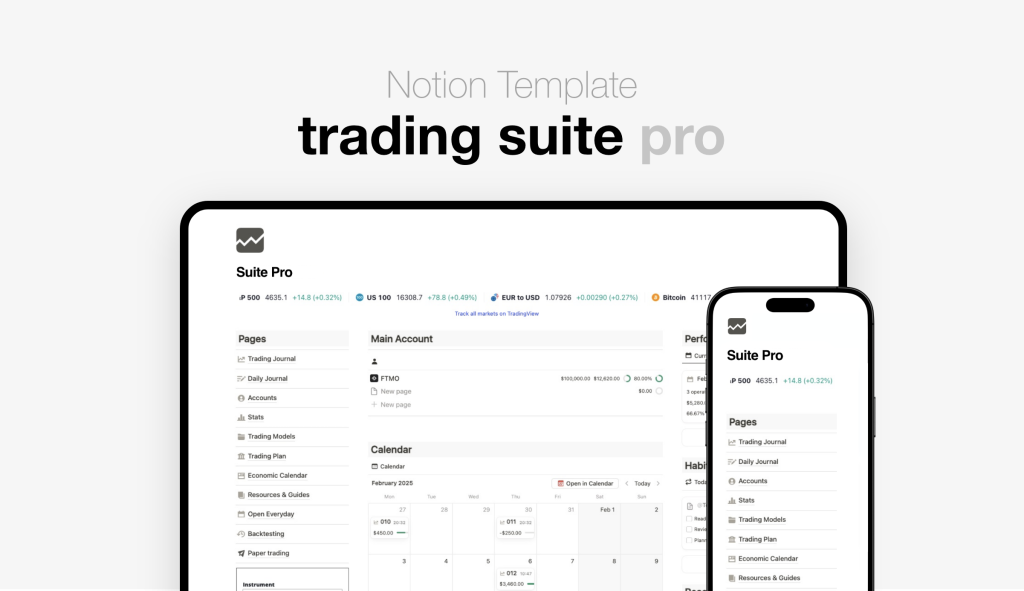
Notion Template for Investing
og and review trades, develop and document trading models, test strategies through backtesting, manage multiple accounts, store research and resources, track economic events, and calculate position sizing—all without leaving Notion. The focus is on consistency, decision quality, and long-term improvement rather than isolated trades.